

Strategy alignment, explained
Every organization talks about aligning initiatives with strategy. The real question is how to achieve that alignment in practice and sustain it as business priorities evolve.
Why strategic alignment matters
Every strategy defines a direction. It identifies the organization's priorities, the capabilities that need to be strengthened and the outcomes it aims to achieve. However, strategy only creates value when initiatives, decisions and investments consistently support those objectives.
Strategic alignment is about connecting every initiative to a business priority, ensuring that resources, effort and execution capacity are focused where they create the greatest impact.
How to achieve alignment
Every project introduces change, whether through new processes, technologies, services or ways of working. The challenge is not simply implementing those changes, but ensuring that each one contributes to the intended strategic outcome.
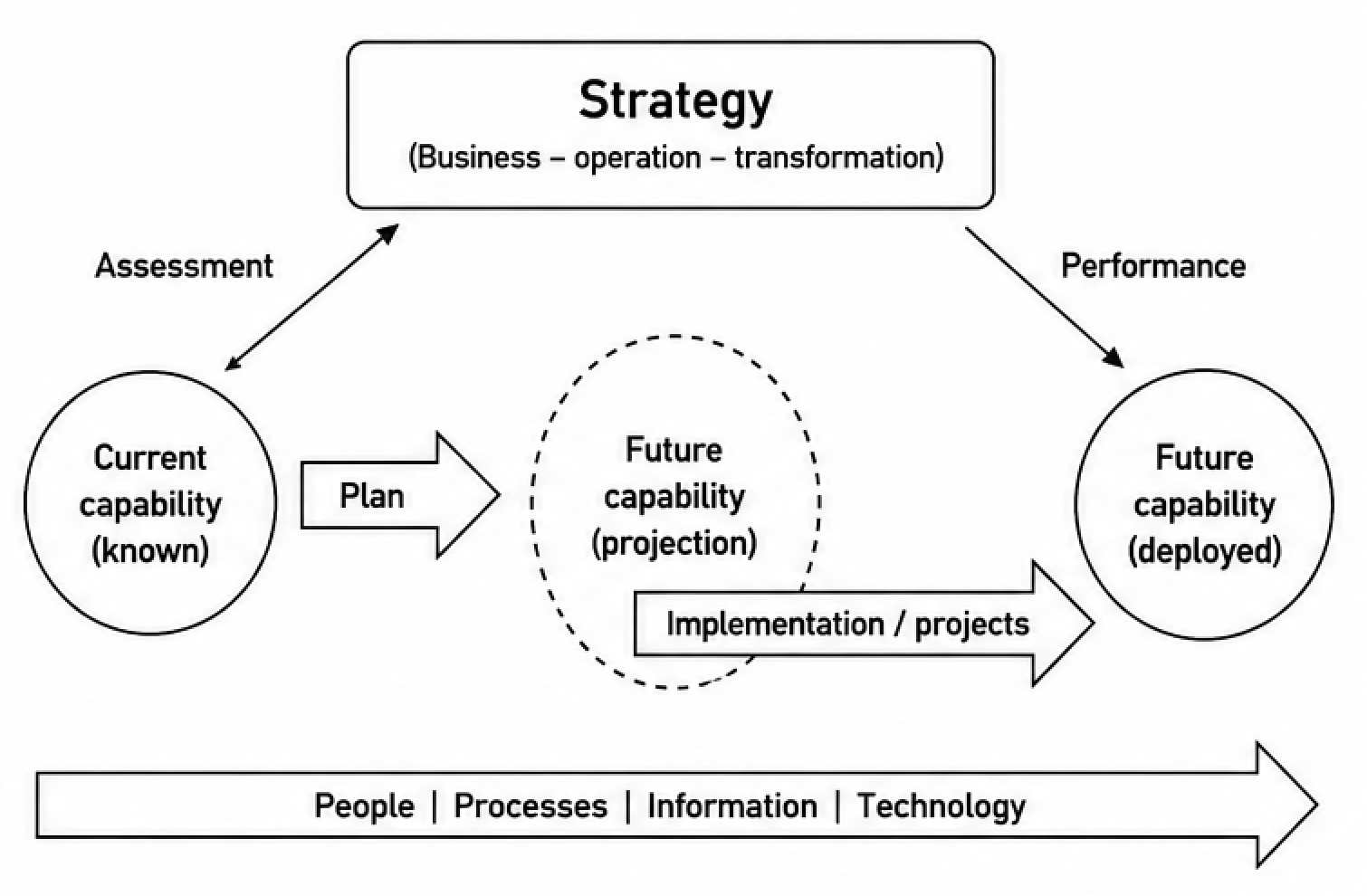
When initiatives move forward without that connection, organizations experience competing priorities, duplicated effort, delays and benefits that are difficult to demonstrate. When strategy guides decisions from the outset, execution becomes more consistent, predictable and value-driven.
Four steps to build alignment
- Understand the current state. Assess capabilities, processes, technologies and constraints to establish a realistic execution baseline
- Define the future state. Translate strategy into clearly defined capabilities, changes and business outcomes
- Design the roadmap. Prioritize and structure initiatives to maximize value while minimizing risk and dependencies
- Execute and adapt. Deliver initiatives, monitor outcomes and adjust the portfolio as business priorities evolve
Why it works
This approach transforms strategy from a document into a practical guide for decision-making. Every initiative has a clear purpose, every investment supports a business priority and every outcome can be measured by the value it creates.
When governance, methodologies and execution practices become part of the operating model, organizations develop capabilities that remain long after implementation and strengthen future transformation efforts.