

A strategy for managing complex projects
Complex projects require a different way of being managed. As uncertainty increases, applying a methodology too rigidly often creates more problems than it solves.
What makes a project genuinely complex
Implementing operational change is usually complex. Project management involves a degree of complexity around goals, scope, interdependencies, uncertainty and risk. But some projects deserve to be classified as complex because they have multiple stakeholders with different needs, multidisciplinary teams, emerging technologies and a dynamic, changing environment.
These projects are typically developed in organizations that operate under volatility, uncertainty, complexity and ambiguity, known as VUCA conditions, and share some of the characteristics we outline below.
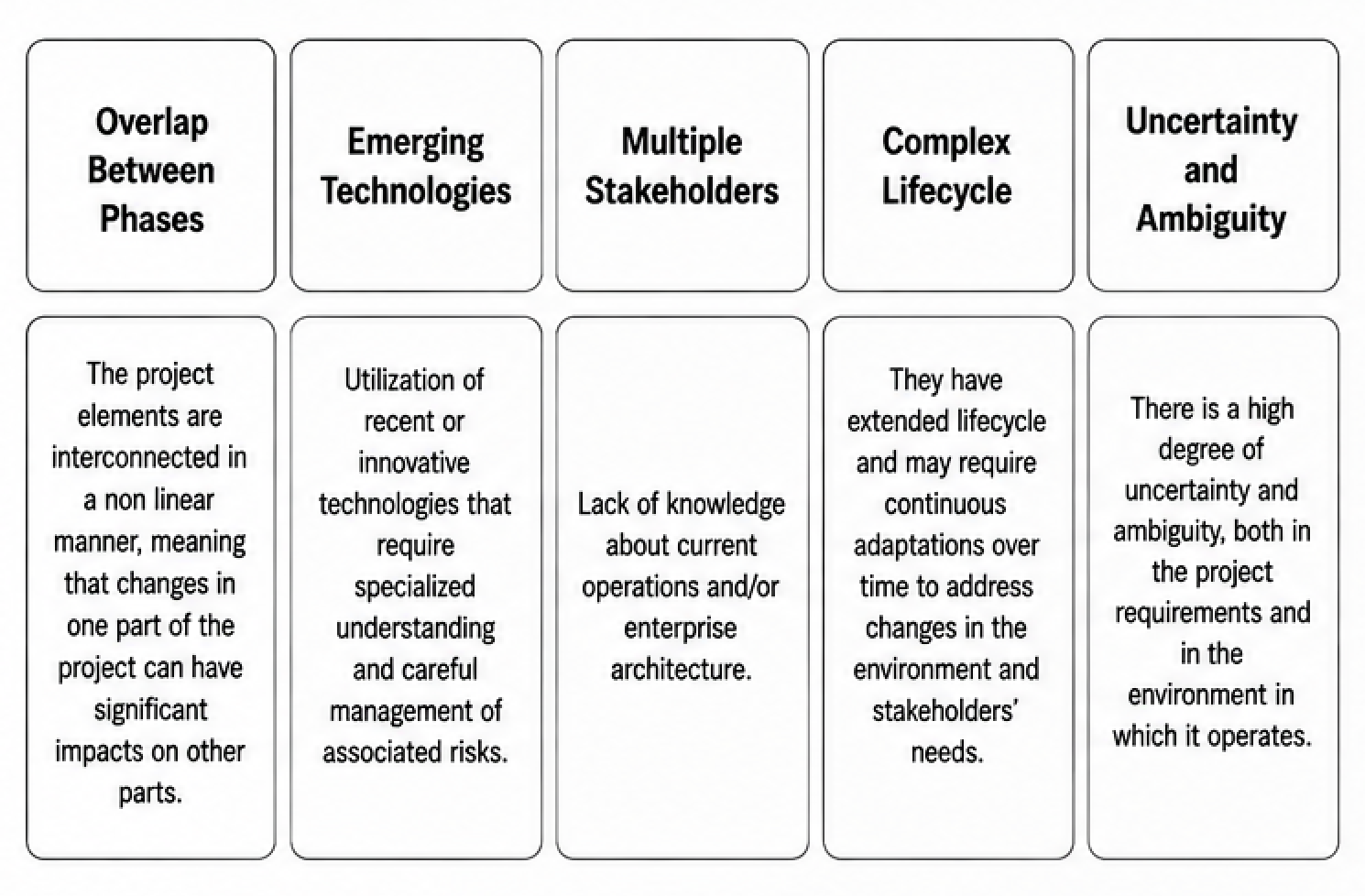
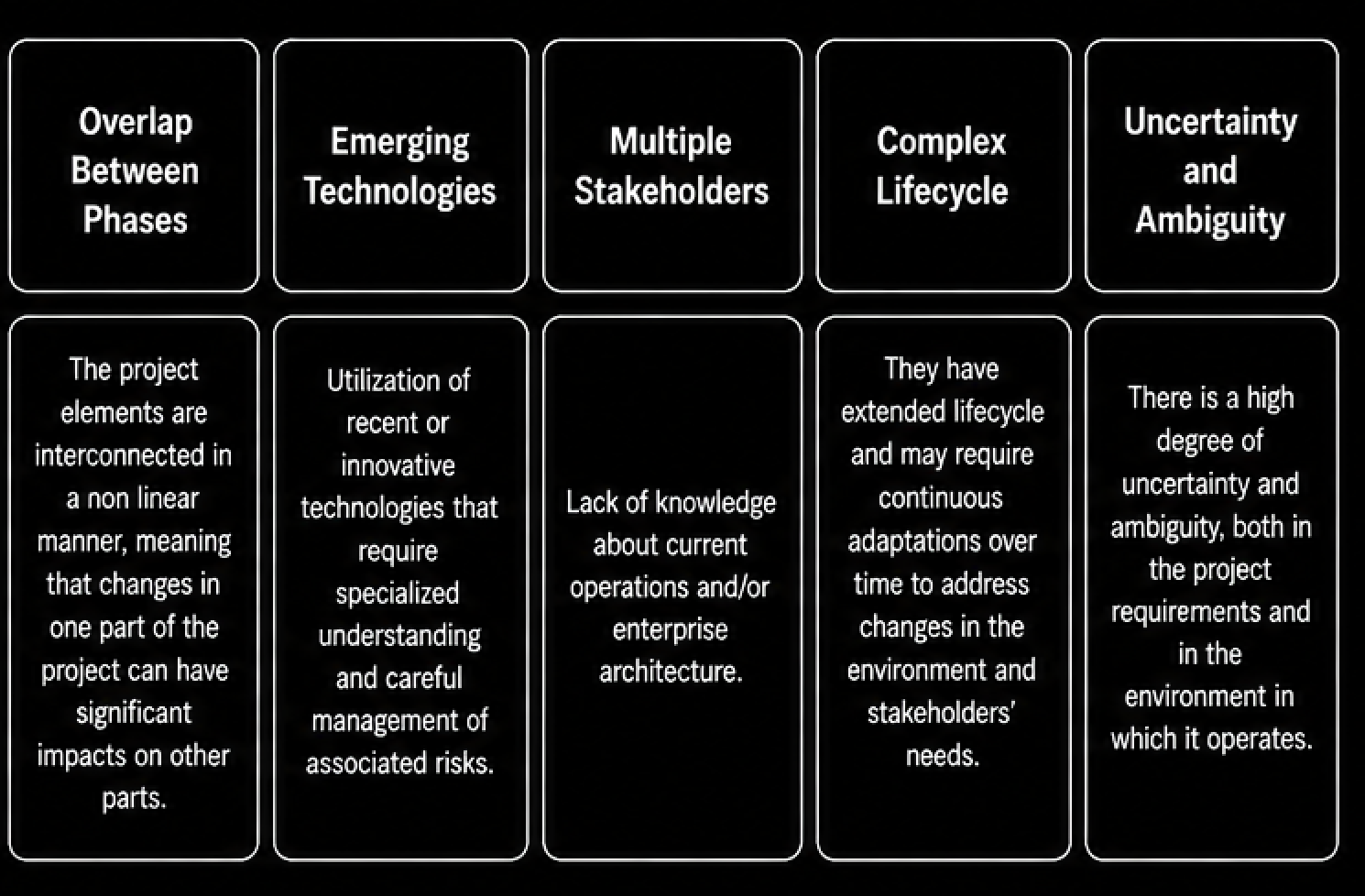
Why a rigid framework fails here
Managing such projects requires flexible and adaptive approaches to planning, execution and control. This means deliberate attention to risk management, effective communication, stakeholder collaboration and structured problem solving. It often involves agile or hybrid methodologies that allow rapid response to change and deeper stakeholder involvement throughout the lifecycle.
The sequential, rigid methodology we mentioned at the start loses its relevance here. It may still work in certain cases, but many projects need practices that adapt to the context and prevent the framework itself from amplifying the project's inherent uncertainty.
Using Cynefin to categorize the effort
The Cynefin framework (Dave Snowden) provides guidance on how to categorize methodological effort in managing complex projects. It allows the development of a management framework that considers practices applicable to different levels of complexity, using appropriate knowledge, tools and techniques for each scenario.
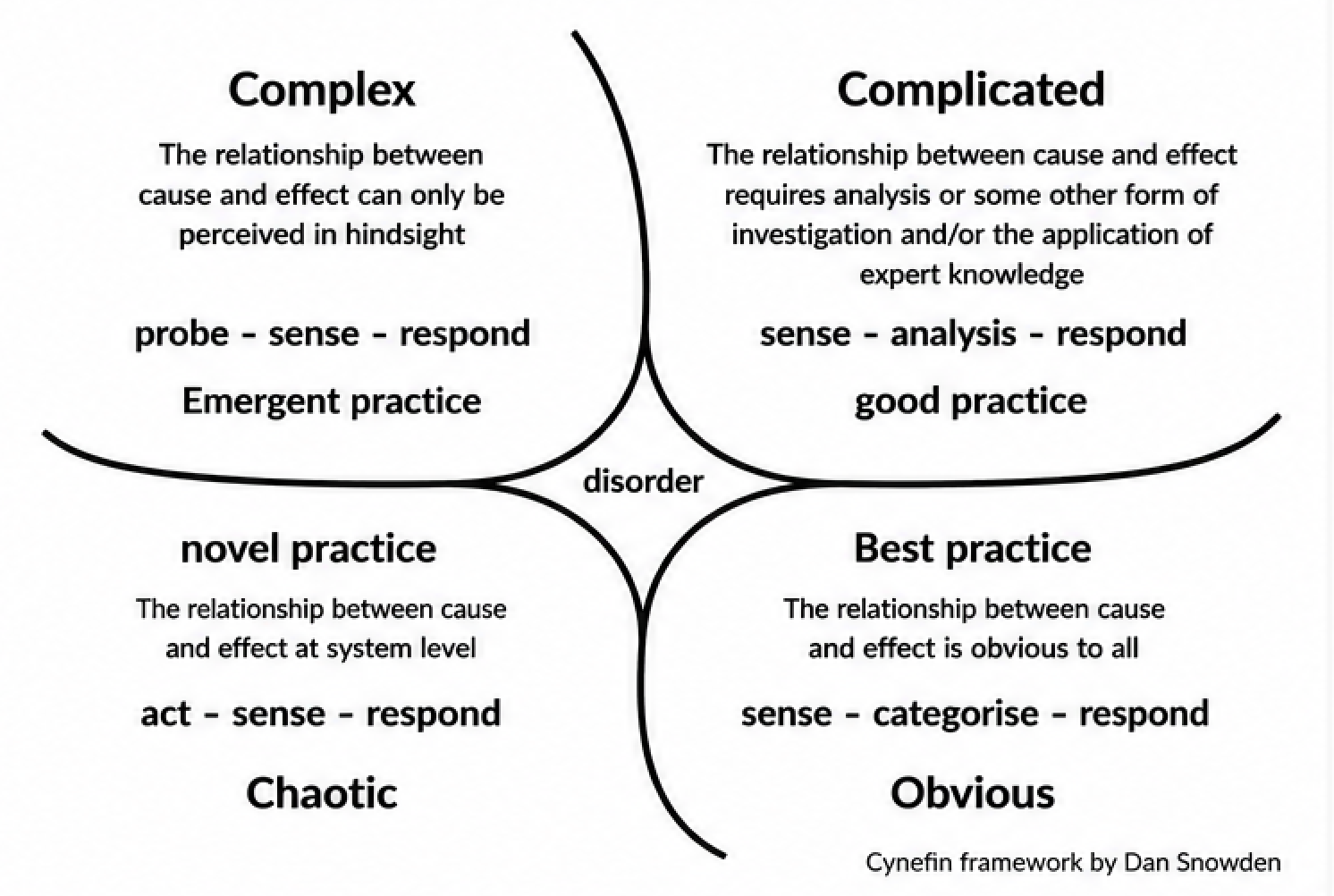
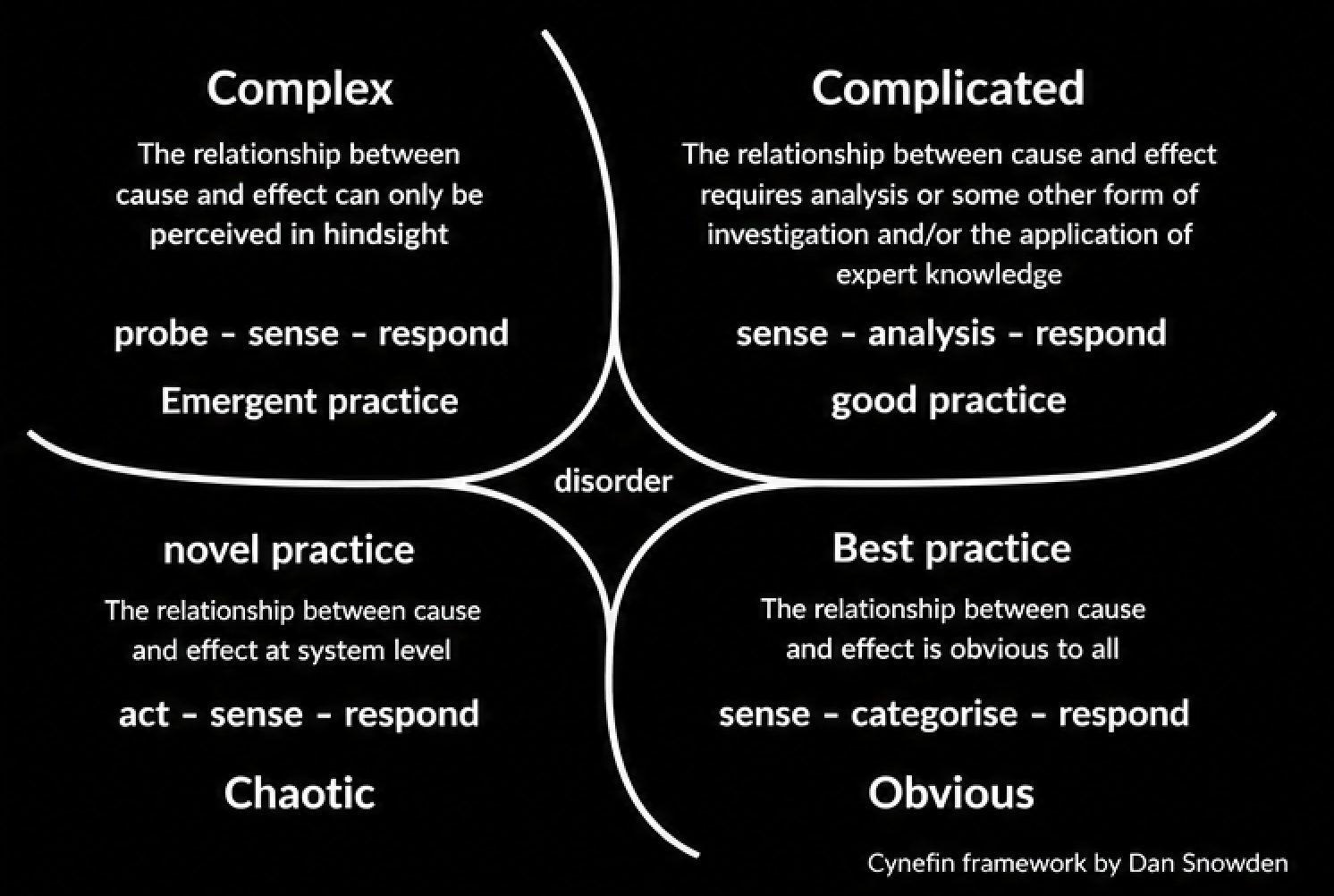
Anticipating complex projects with a flexible methodological framework not only prevents complexity from taking us by surprise. It also helps guide the team and create a sense of control. That translates into greater confidence that complexity is just another element to manage within the context of the project, resulting in more effective execution and higher stakeholder satisfaction.
What this looks like in practice
- Choose the methodology to fit the project, not the project to fit the methodology.
- Treat risk as a continuous conversation, not a register that gets reviewed monthly.
- Invest in shared sense-making. Hold frequent, short forums where the team aligns on what the project now looks like.
- Resist the urge to add process when complexity rises; add structure to the conversation instead.